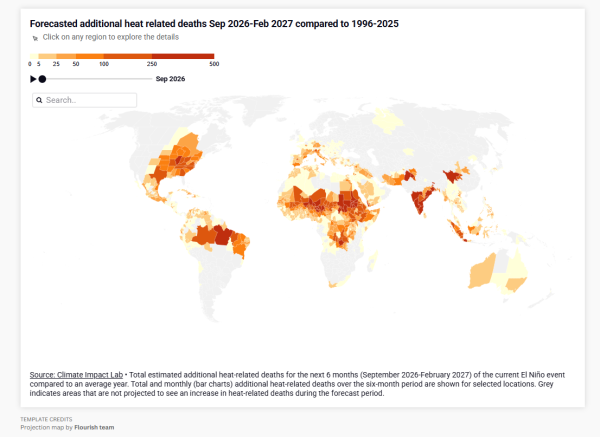

Super-strong El Niño could lead to 450K deaths. Map shows the states hit hardest
A powerful El Niño is raising concerns about extreme heat worldwide, with new research pointing to a potentially severe human cost. The Climate Impact Lab estimates that unusually high temperatures during June 2026 through February 2027 could contribute to approximately 451,000 additional deaths compared with a normal year.
That figure covers nine months. Within that period, researchers project around 239,000 additional heat deaths between September 2026 and February 2027. These estimates describe potential losses associated with heat, rather than a combined death toll from floods, droughts and other weather disasters.
The projected burden is uneven. Countries across the Global South face particularly serious risks, with Nigeria, Indonesia and Sudan leading the report’s country rankings for the September–February period. The researchers estimate approximately 31,400 additional deaths in Nigeria and 19,300 in Indonesia. Across the African region grouped as the Sahel in the report, the projected total reaches 66,800.
The United States also faces a measurable threat. The analysis projects about 3,500 additional heat deaths from September 2026 through February 2027.
The danger may extend beyond the current forecast window. Researchers warn that elevated temperatures and their health consequences could continue into June and July 2027. That makes February an endpoint for these estimates, rather than a signal that the threat will have passed.
Heat is only part of the challenge. Changes in rainfall and temperature can also increase risks from drought, wildfire and flooding. Preparing for those disruptions remains essential, but the report argues that preventing heat deaths deserves a central place in emergency planning.
The researchers also emphasize that the projected toll can be reduced. Early warning systems, cooling centers and protections for outdoor workers are among the measures they identify as ways to save lives. Directing resources toward places facing the greatest risk could prevent tens of thousands of deaths.
For governments and communities, the report offers both a warning and an opportunity: preparing before dangerous temperatures arrive could substantially change the outcome.
You can click here to open the map in a new tab.